
1. Rivers
  2. Oceans
  3. Expeditions
  1. Complimentary Brochures
Call Viking at 138 747 or Contact Your Travel Advisor
Viking Viking Viking
Please fill out this field
Menu
  1. Rivers
  2. Oceans
Please fill out this field
Use enter or spacebar key to select the link
Use enter or spacebar key to expand or collapse the menu
    • Find A Cruise
    • Special Offers
    • Regions

      Polar Regions

      • Antarctica
      • The Arctic

      South America

      North America

      • Canada
      • United States
    • Waterways
      • Arctic Ocean
      • Great Lakes
      • Southern Ocean (Antarctic)
    • Seasonal & Combination
      • Longitudinal World Cruises
      • Grand Journeys
      • River + Ocean Combinations
    • Other Cruise Types
      • Oceans
      • Rivers
    • Fleet Overview
    • 360° Ship Tour
    • Expedition Ships
      • Viking Octantis
      • Viking Polaris
    • The Viking Difference
    • Cultural & Scientific Partners
    • Awards
    • News
    • Complimentary Brochures
    • My Viking Story
    • Community
    • One Viking
    • My Viking Journey
    • Viking Air
    • Updates on Current Sailings
    • Travel Information
    • Frequently Asked Questions
    • Silver Spirits Beverage Package
    • Why Viking
    • Cruise Itineraries
    • Resources & Experts
    • Ships
    • Destination Insights
    • All
Please fill out this field
Snow-capped mountains reflected in calm lake

Discover the cultural treasures of North America

Experience the majestic beauty and lively history of North America. Whether you choose to travel in the US, Mexico, Central America, Canada or Greenland, a variety of enriching activities and awe-inspiring landscapes await you. Read on to uncover six classic New Orleans dishes, explore what factors made the US automotive industry so successful and learn about the engineering feats that allow ships to traverse the Great Lakes with ease.
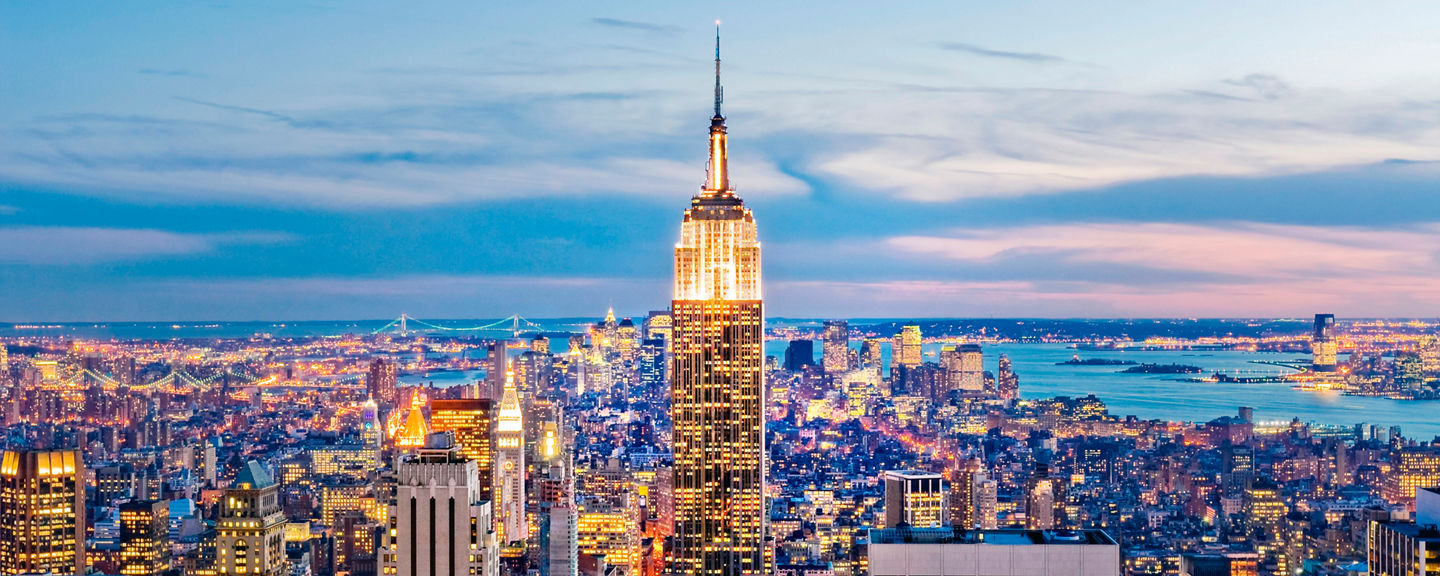
Empire State Building at sunset in NYC

North America

North America is the third-largest continent, covering an area of 9,355,000 sq mi. (24,230,000 sq km). It occupies the northern portion of the Western Hemisphere and is bounded on the north by the Arctic Ocean, on the east by the Atlantic Ocean, on the south by the Caribbean Sea and on the west by the Pacific Ocean. The continent’s highest point is Mount McKinley in Alaska—also known as Denali—while the lowest point is California's Death Valley.

Given that North America extends from within 500 mi. (800 km) of both the North Pole and the Equator, the climate is diverse, ranging from polar tundra to tropical rainforest. Still, the majority of North America falls within the temperate zone, characterized by mild-to-cold winters and warm-to-hot summers.

This vast region is home to many iconic landmarks, cultural treasures and natural wonders, including:

  • The vibrant musical traditions of the American South, including New Orleans jazz, Mississippi Delta blues and the rock ‘n’ roll spirit of Elvis Presley’s Memphis estate, Graceland
  • Boston’s plentiful historic sites such as the Old South Meeting House, where Samuel Adams started the Boston Tea Party
  • Vesterheim, the National Norwegian-American Museum and Folk Art School, which showcases Wisconsin’s rich Scandinavian heritage
  • L’Anse aux Meadows in Canada, the site of the first Norse settlement in the Americas, predating Columbus by 500 years
  • The magnificent Château Frontenac in Quebec City, a historic castle-like building perched atop a hill overlooking the St. Lawrence River
  • The blue-tinged glaciers of the Canadian High Arctic
  • The stunning, UNESCO-listed Ilulissat Icefjord in Greenland
  • Alaska’s Chilkat Bald Eagle Preserve, a refuge to several hundred of these magnificent birds
  • Oahu’s Liliʻuokalani Botanical Gardens, which boasts a remarkable collection of native Hawaiian plants
  • San Gervasio, a pre-Columbian Mayan site located on the beautiful Mexican island of Cozumel
Ancient stone ruins in lush greenery
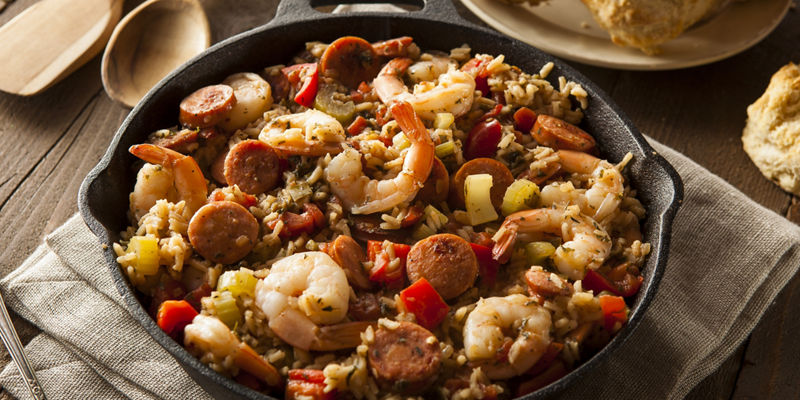
  • Homemade shrimp and sausage jambalaya in skillet

    6 iconic dishes from the “Big Easy”

    Few cities offer more delicious cuisine than New Orleans. French, Creole and Cajun cultures combine to offer a dazzling menu of epicurean delights from the French Quarter to the surrounding parishes. Here are just a few of the signature dishes that are must-tries for visitors:

    • Jambalaya
      While jambalaya has different recipes, the basic ingredients remain the same, whether Cajun or Creole: rice, sausage, stock and vegetables. It can also include seafood or chicken. Creole jambalaya features the holy trinity of vegetables (celery, onions and bell peppers) plus tomatoes, while the Cajun version omits the tomatoes and adds cayenne pepper for spice.
    • Muffuletta
      Salvatore Lupo, the original owner of the Central Grocery on Decatur Street, invented this legendary New Orleans sandwich in 1906. Packed with ham, salami, mortadella, provolone and mozzarella, it is topped with olives, celery, onions and carrots between two slices of Italian bread. That might seem excessive, but it is New Orleans, after all.
    • Po’ Boys
      This mouth-watering sandwich was born in 1929 at Martin Brothers’ French Market during a streetcar workers’ strike. The Martin brothers handed out free sandwiches to the hungry strikers, or “poor boys.” Originally the sandwiches included fried potatoes, gravy and roast beef on French bread. Today, Po’ Boys are more elaborate and can include fried chicken, fried shrimp, crab or oysters with lettuce, tomatoes and a slice of lemon.
    • Crawfish
      This classic New Orleans seafood can be served boiled, sauteed, baked or fried. Crawfish resemble small lobsters but are freshwater fish found in the ponds and rivers of Louisiana. Boiled crawfish includes potatoes, corn, garlic, onions, lemons and hot sauce for a bit of kick.
    • Andouille sausage
      A popular Louisiana sausage with German and French roots, andouille is found virtually everywhere in the French Quarter. Often served with red beans and rice or in a gumbo, this sausage is noted for its smoky, sharp flavor.
    • Beignets
      Another favorite pastime in New Orleans is enjoying a beignet at Café du Monde. This decadent, deep-fried pastry was brought to the region by French colonists. These puffy treats come with a healthy dose of powdered sugar on top and are best enjoyed with coffee.
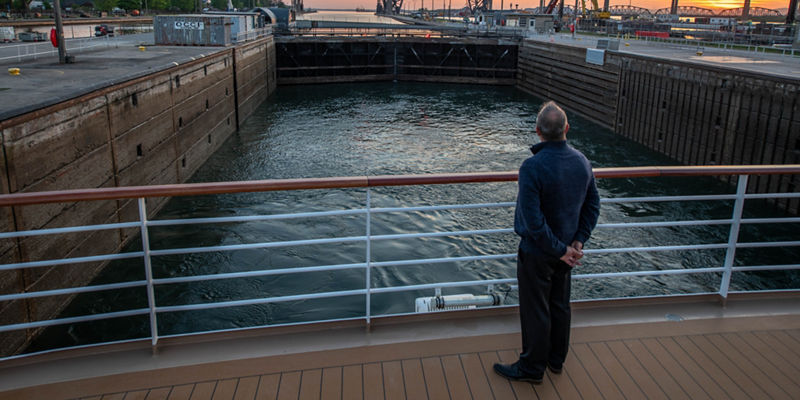
  • Man observing canal locks at sunset

    The remarkable Great Lakes locks

    North America is home to the largest freshwater ecosystem in the world, the Great Lakes. This impressive lake network covers more than 94,000 sq mi. (243,458 sq km) along the border between Canada and the United States, comprising five lakes that contain 21 percent of the world’s freshwater: Lakes Superior, Michigan, Huron, Erie and Ontario.

    The Great Lakes have been integral to trade and transportation in North America since long before the US or Canada were established. Indigenous people used these waterways for fishing and transportation, and the lakes later supported the first settlers from Europe after they arrived on the continent. What is now known as the Great Lakes–St. Lawrence Seaway system eventually grew to become one of the world’s most vital international trade routes.

    The US and Canada constructed channels and locks throughout the region to ensure that ships could safely navigate natural obstructions, including rocks, shallow water, rapids and waterfalls. Ships enter the locks through a gate at one end. Then, water is allowed to flow by gravity in or out of the lock basin to raise or lower the ship. Once the water has reached an equal level on either side of the exit gate, the ship departs the lock basin and continues on its navigation.

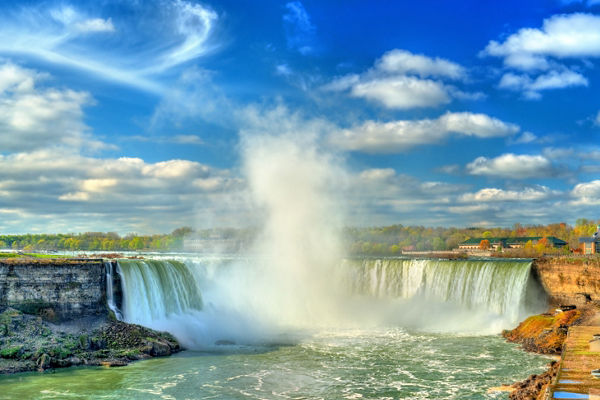
    The Welland Canal is an engineering marvel of the Great Lakes system. It contains eight locks that raise and lower ships a total of 326 ft. (99 m) between Lake Ontario and Lake Erie. The canal was built because the Niagara River—the natural connection between the Erie and Ontario lakes—has impassable falls and rapids, including the famous Niagara Falls. The lock system is essential to trade in the region, given that around 3,000 vessels, carrying 40 million tons of cargo, use the Welland Canal annually.

    Between Lake Superior and Lake Huron are the Soo Locks, another essential lock system that is known by their operator, the US Army Corps of Engineers, as the “Linchpin of the Lakes.” Located at Sault Ste. Marie in Michigan, the Soo Locks and the St. Marys Falls Canal enable ships to bypass rapids on the St. Marys River and safely pass through the 21-foot (6.5-m) elevation change between Lakes Superior and Huron. Two parallel lock basins operate here: the MacArthur Lock and the Poe Lock. Ships of over 1,000 ft. (304 m) in length can be accommodated, facilitating over 80 million tons of cargo each year—including more than 90 percent of all iron ore in the United States.

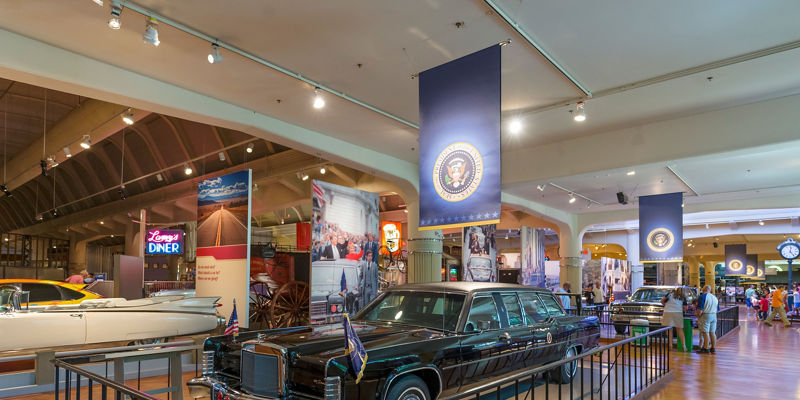
  • Presidential limousine in museum exhibit

    The rise of the US auto industry

    The automobile may have been invented in Europe, but its dominance as an industrial and cultural force is truly American. Fed by plentiful natural resources and produced at an astounding rate on assembly lines, American-based automobile manufacturers quickly came to dominate the world market. In 1913, US automobile manufacturers alone accounted for 80 percent of the world’s car production. This trend held through the Great Depression, World War II and beyond, fueling the US’s economic preeminence until the early 1980s.

    There were hundreds of US automobile manufacturers during the early 20th century, but three Detroit-based companies soon dominated the industry—the “Big Three” of Ford, General Motors and Chrysler. Much credit to the automotive revolution can be given to Michigan native Henry Ford. His introduction in 1908 of the reliable Model T and the use of the assembly line to produce it in large numbers at a reasonable cost to consumers ushered in an era of unprecedented industrialization. Later innovations, such as the River Rouge Complex in Dearborn, further advanced mass-production methods.

    During World War II, many “Big Three” factories were retooled for the war effort. Between 1940 and 1945, they manufactured some 2.6 million military trucks and 660,000 jeeps, as well as one-half of the machine guns and carbines made in the US during the war, 60 percent of the tanks and all the armored cars. Ford’s famous manufacturing plant in Willow Run, Michigan, produced 8,685 B-24 Liberator heavy bombers.

    Over the ensuing decades, all three automakers jockeyed for dominance in the American market, introducing clever designs and engineering advancements to produce beloved American models, such as the Ford Mustang and Taurus, the Chevrolet Suburban and Corvette, and the Chrysler Town and Country.

    The rise of the “Big Three” and the integration of the automobile into everyday life also introduced innumerable changes to living habits and social customs, including increased mobility, recreational opportunities, the use of credit and the outward growth of suburbia.

    The “Big Three”—and their competitors—remain an important part of the Great Lakes region’s economic vitality, contributing heavily to the region’s annual GDP, either directly or through auto-related businesses.

    Today, visitors can discover Detroit’s rich culture and creative urban development, tour the impressive Ford Rouge Factory and explore the remarkable Henry Ford Museum of American Innovation, where iconic automobiles and historic artifacts tell the story of 20th-century American ingenuity.
North America Highlights

A journey through North America reveals the storied history, iconic cities and stunning landscapes of a wonderfully diverse continent. From dramatic mountains to fertile farmlands, enjoy opportunities to immerse yourself in the many splendors of this region. Here are just a few of the highlights that await:

  • Festive French Quarter and Creole cuisine in New Orleans
  • Civil War history at Vicksburg National Military Park
  • Mark Twain’s boyhood home & America’s literary history
  • Norwegian cultural experience at Vesterheim
  • Old North Church, where Paul Revere hung a lantern signal
  • New York City’s Statue of Liberty & Empire State Building
  • Mayan culture and a traditional dance show
  • Scuba dive in the Caribbean Sea
  • Greenland’s pristine Nuup Kangerlua Fjord
  • Traditional Greenlandic arts and crafts

Destination Insight Videos

Woman on cruise ship with city skyline

Discover a vibrant cultural hub in Canada with Jean Newman Glock (23:12)

Join VikingAmbassador-at-Large Jean Newman Glock as she travels “Beyond the Brochure” and explores the hidden gems of the Great Lakes region. Follow Jean through Canada’s largest city, Toronto, where history seamlessly blends with urban charm along the shores of Lake Ontario. First, she strolls the cobblestone streets of the iconic Distillery District and encounters a one-of-a-kind dog sculpture. Then, Jean indulges in an array of culinary delights, including a true Canadian favorite—a maple bacon sandwich. Find inspiration to plan your own voyage to Toronto and the Great Lakes region on one of our expedition itineraries.

Ancient Mayan pyramid in lush jungle

Unearth the archaeological wonders of San Gervasio with Dr. Michael Fuller (41:39)

Embark on a cultural journey with Viking Resident Historian Dr. Michael Fuller during his captivating presentation, "The Rise and Fall of the Mayan Empire." Dr. Fuller deciphers hieroglyphics adorning intricately decorated ceremonial pots, unraveling the mysteries of Mayan culture in Cozumel, Mexico. Explore the Mayan ruins at San Gervasio—a prominent site you can explore with the help of an expert local guide on a voyage with us—and enhance your understanding of the Mayan Empire, from its historical zenith to its eventual decline.

Scenic coastal path with cruise ship view

Discover the Great Lakes region with Jean Newman Glock (49:46)

Join Viking Ambassador-at-Large Jean Newman Glock as she travels “Beyond the Brochure” and explores the hidden gems of Lake Michigan and Lake Huron. In Alpena, MI, Jean visits the Thunder Bay Marine Sanctuary where she uncovers the remarkable efforts being made to preserve the shipwrecks resting beneath the waves. Then, she journeys to Algoma, WI, on Lake Michigan to raise a glass to the picturesque von Stiehl Winery and sample local varietals. Finally, Jean arrives at Mackinac Island and heads to the iconic Grand Hotel to enjoy tea with a resident historian who sheds light on how the hotel survived Prohibition.

Humpback whale breaching near snowy mountains

Encounter Alaskan wildlife in their natural habitat with Scott Ranger of the Gastineau Guiding Company (15:50)

Marvel at Orcas, humpback whales and other magnificent wildlife as we explore Alaska's coastline with Scott Ranger from the Gastineau Guiding Company. In this fascinating presentation, hear tales about their whale watching excursions, designed to collect data and support ongoing research.

North America Travel FAQ

The best time to visit North America varies by region. Generally, the spring (April to June) and fall (September to November) are ideal across much of the continent. These seasons offer milder weather, fewer crowds at iconic landmarks and greater value. On the East Coast of the US, cities like New York and Boston are especially pleasant in the fall, with vibrant foliage and cooler temperatures. The West Coast, including California and the Pacific Northwest, enjoys a more temperate climate year-round, but early fall can be an excellent time for avoiding summer crowds while still enjoying warm, dry days.

North America is composed of three major countries: the United States of America, Canada and Mexico. The US includes 50 states, each offering distinct landscapes and cultures—from the sunny beaches of California and Florida to the lush forests of the Pacific Northwest and the historic cities of the Northeast. Canada, with its ten provinces and three territories, is known for its vast wilderness, French and British heritage and vibrant cities, including Toronto and Vancouver. Mexico, with 32 federal entities, features the remnants of ancient civilizations, elegant colonial architecture and tropical coastlines.

North America is home to some of the world’s most visited cities, each offering iconic landmarks that reflect its unique culture and history. In New York City, visitors can explore Central Park—a sprawling green oasis in the heart of Manhattan—and the Empire State Building, which offers panoramic views of the skyline. Los Angeles draws travelers interested in exploring its entertainment legacy and popular beaches. The Hollywood Sign and Santa Monica Pier are must-see attractions that capture the city’s blend of glamour and beachside charm.

In Toronto, Canada’s largest city, the Royal Ontario Museum showcases natural history and cultural treasures from around the world, while the Toronto Islands offer a peaceful escape with skyline views. In Vancouver, visitors can walk the Capilano Suspension Bridge or explore Stanley Park, a massive urban park featuring trails, beaches and Indigenous totem poles. Montreal charms guests with its European flair. There, the Notre-Dame Basilica, Bonsecours Market and French-influenced cuisine are standout highlights.

Further south, Mexico City offers a rich blend of ancient and colonial heritage. The Palacio de Bellas Artes is a stunning cultural center, while Chapultepec Castle provides history and sweeping views of the city. In Cancún, travelers can enjoy white-sand beaches or take a day trip to Chichén Itzá, one of the country’s most famous Mayan ruins. These destinations showcase the diversity of North America, from urban sophistication to natural beauty and ancient wonders.

Visitors to North America can enjoy a wide variety of unique cultural and historical experiences across its diverse cities and regions. In the United States, the Northeastern city of Boston offers a deep dive into American Revolutionary history. A visit to the Old North Church brings history to life—it is there that Paul Revere’s famous “one if by land, two if by sea” lantern signal was hung. Nearby Cambridge is home to Harvard University, the oldest institution of higher education in the US, where visitors can stroll through Harvard Yard and explore world-class museums and libraries.

New York City dazzles with its iconic landmarks, vibrant energy and world-famous cultural offerings. Visitors can experience the bright lights of Times Square, attend a theatrical performance on Broadway, take a ferry to the Statue of Liberty and explore the city’s rich culinary scenes. Further south, the state of Tennessee offers a musical journey through American culture. In Memphis, fans of rock and roll can tour Graceland, the home of Elvis Presley. In Louisiana, the streets of New Orleans pulse with the rhythms of jazz music, especially in the French Quarter and along Bourbon Street.

In Canada, the Great Lakes region offers natural and urban attractions. Niagara Falls is a must-see, with its thunderous cascades and boat tours that bring visitors up close to the mist. Cities like Toronto blend modernity with history—its Distillery District is home to North America’s largest preserved collection of Victorian industrial architecture, now transformed into a lively hub of galleries, shops and restaurants. On the West Coast, Los Angeles invites visitors to walk among the stars on the Hollywood Walk of Fame and visit the historic Grauman’s Chinese Theater, where generations of celebrities have left their handprints in the sidewalk’s cement.

Packing for a trip to North America depends on the time of year, your destinations and the types of activities you plan to enjoy. For most visitors, it is recommended to bring layered clothing—temperatures can vary widely between regions like the Northeast, the West Coast and the Great Lakes. Include a mix of short- and long-sleeved shirts, a light jacket or sweater and a waterproof layer in case of rain. Comfortable walking shoes are suggested, especially if you plan to explore cities like New York, Boston or Toronto on foot. If your trip includes outdoor or nature-focused destinations—such as Niagara Falls, the Great Lakes, or national parks in Canada or the U.S.—consider packing hiking shoes, a daypack, sunscreen and insect repellent. For coastal cities like Los Angeles or Vancouver, be sure to pack sunglasses, a hat and swimwear. Even in summer, evenings can be cool near the water, so a light sweater or jacket is useful. Lastly, bring travel essentials like a universal power adapter—especially if you are visiting both the US and Canada—copies of your travel documents and any necessary medications.

In New Orleans, find Cajun and Creole specialties like gumbo, jambalaya, catfish and beignets. In the American South and heartland, expect barbecue, fried chicken and comfort dishes such as succotash. On Great Lakes voyages, enjoy diverse urban food scenes and local specialties shaped by Canadian and Midwestern influences, such as Wisconsin's famous cheeses and Toronto's classic Canadian maple bacon sandwich.

North America’s climate is diverse, ranging from polar tundra in the north to tropical rainforests in the south. Most of the continent falls within a temperate zone, featuring mild-to-cold winters and warm-to-hot summers. Spring and autumn offer milder weather and fewer crowds, while summer offers longer daylight hours for exploring. With its cooler temperatures and lower humidity, winter is a wonderful time to sail the Lower Mississippi River.

The heart of America’s automotive history is in the Great Lakes region, specifically Detroit. You can tour the Ford Rouge Factory and explore the Henry Ford Museum of American Innovation. These sites showcase the revolutionary impact of the assembly line and the enduring legacy of the "Big Three”—Ford, General Motors and Chrysler.

Immerse yourself in America's musical traditions, from jazz in New Orleans to Motown in Detroit. Visit Elvis Presley's Graceland, explore colonial history on Boston’s Freedom Trail, visit the Vesterheim Norwegian-American Museum in Iowa or delve into the history of chocolate at the Mayan Cacao Company in Mexico. Each region offers a unique blend of cultural influences.

A visit to New York City is not complete without seeing the Statue of Liberty and Empire State Building. Other highlights include Niagara Falls, the historic French Quarter in New Orleans and the glaciers of the Canadian High Arctic. In Mexico, the Mayan ruins of Chichén Itzá offer a glimpse into an ancient civilization.

All-Inclusive Itineraries—North America

Choose one of our enriching, all-inclusive voyages and discover the many benefits of exploring in Viking comfort.
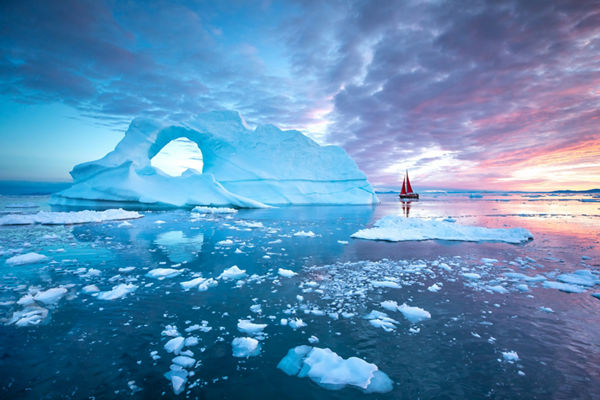
Sailboat near iceberg at colorful sunset
Hide map Show map

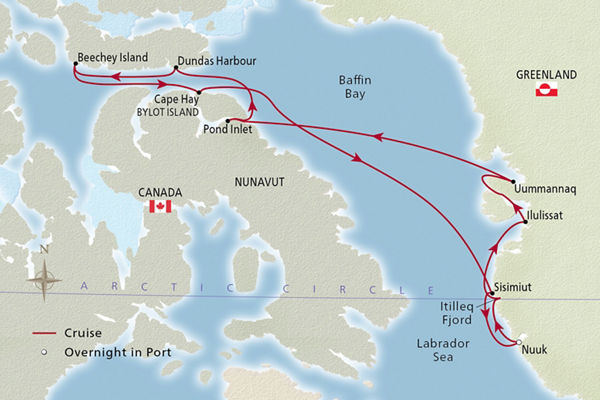
Into the Northwest Passage

Roundtrip Nuuk, Greenland
LIMITED TIME OFFERS

13 days
8 tours
2 countries
AU$22,995 from
  • Learn More
  • Request a Quote
Majestic Niagara Falls under blue sky
Hide map Show map

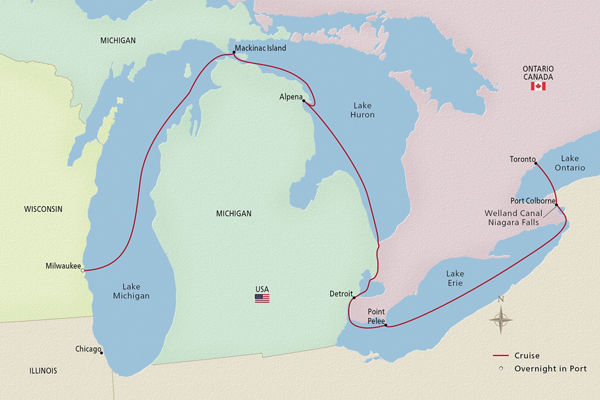
Niagara & the Great Lakes

Toronto, Ontario to Milwaukee, Wisconsin
LIMITED TIME OFFERS

8 days
2 countries
AU$12,495 from
  • Learn More
  • Request a Quote
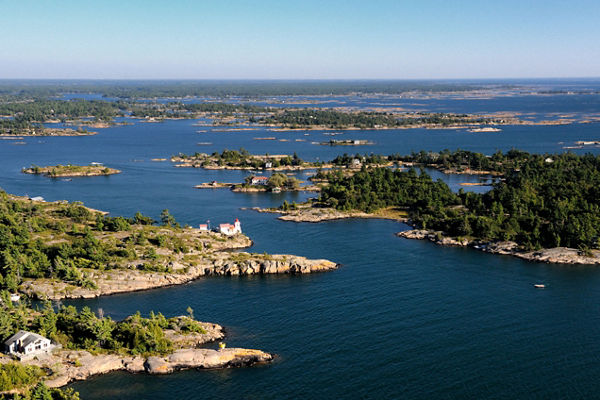
Scenic aerial view of island coastline
Hide map Show map

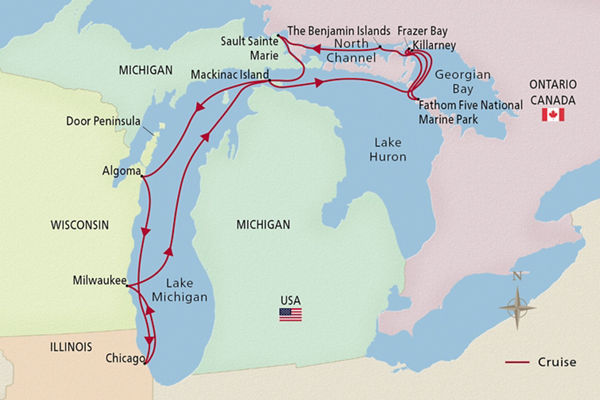
Great Lakes Treasures

Roundtrip Milwaukee, Wisconsin, United States
LIMITED TIME OFFERS

10 days
2 countries
AU$13,795 from
  • Learn More
  • Request a Quote
Hide map Show map

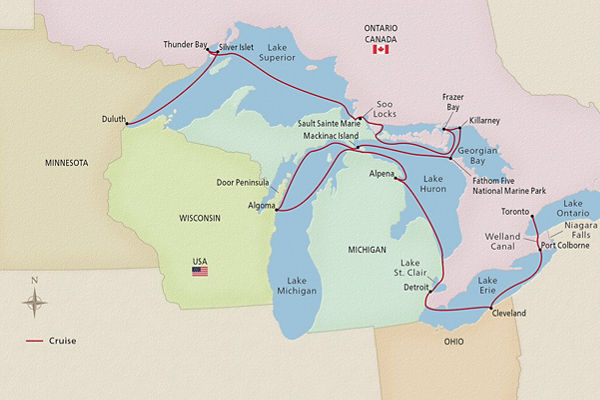
Great Lakes Collection

Toronto, Ontario to Duluth, Minnesota
LIMITED TIME OFFERS

15 days
12 tours
2 countries
AU$22,795 from
  • Learn More
  • Request a Quote
View Cruises

Sign up to receive updates from Viking

Stay current with special offers, news and destination-focused content.

SIGN UP
Call a Viking Expert, or see your Travel Agent
Call a Viking Expert, or see your Travel Agent 138 747
138 747
TAP TO CALL
Viking Cruises Viking

Footnote

*Prices are per person, in Australian dollars, based on double occupancy and correct at time of publication. Prices include all advertised discounts, and all offers are subject to availability and may be withdrawn at any time. All offers are only valid for new bookings and only on selected departures made from 05 August 2026 until sold out. Viking reserves the right to correct errors or omissions and to change any and all fares, fees and surcharges at any time. View the Passenger Ticket Contract for full booking terms and conditions. Itineraries are subject to change and may vary by departure date. Map depicts the standard itinerary offered.
  • Company Information

    • Contact Us
    • Speak with a Viking Agent
    • Order a Brochure
    • Travel Advisors
    • FAQ: Expeditions
    • Media Center
    • About Us
    • Investor Relations
    • Careers
    • Site Map
    • Legal
    • Privacy Policy
    • Cookie Policy
  • Viking River Cruises

    • Europe
    • Asia
    • Egypt
    • Mississippi
  • Viking Ocean Cruises

    • Scandinavia
    • British Isles & Ireland
    • North America
    • Caribbean & Central America
    • South America
    • Mediterranean
    • Quiet Season Mediterranean
    • Asia
    • Australia & New Zealand
    • World Cruises
    • Grand Journeys
  • Viking Expeditions

    • Antarctica
    • The Arctic
    • Great Lakes
    • North America
    • South America
    • Grand Journeys
    • Longitudinal World Cruises

© Viking Cruises, 2026. All Rights Reserved.

Footnote

*Prices are per person, in Australian dollars, based on double occupancy and correct at time of publication. Prices include all advertised discounts, and all offers are subject to availability and may be withdrawn at any time. All offers are only valid for new bookings and only on selected departures made from 05 August 2026 until sold out. Viking reserves the right to correct errors or omissions and to change any and all fares, fees and surcharges at any time. View the Passenger Ticket Contract for full booking terms and conditions. Itineraries are subject to change and may vary by departure date. Map depicts the standard itinerary offered.

Company Information

  • Contact Us
  • Speak with a Viking Agent
  • Order a Brochure
  • Travel Advisors
  • FAQ: Expeditions
  • Media Center
  • About Us
  • Investor Relations
  • Careers
  • Site Map
  • Legal
  • Privacy Policy
  • Cookie Policy

Viking River Cruises

  • Europe
  • Asia
  • Egypt
  • Mississippi

Viking Ocean Cruises

  • Scandinavia
  • British Isles & Ireland
  • North America
  • Caribbean & Central America
  • South America
  • Mediterranean
  • Quiet Season Mediterranean
  • Asia
  • Australia & New Zealand
  • World Cruises
  • Grand Journeys

Viking Expeditions

  • Antarctica
  • The Arctic
  • Great Lakes
  • North America
  • South America
  • Grand Journeys
  • Longitudinal World Cruises

Call a Viking Expert, or see your Travel Agent Call a Viking Expert, or see your Travel Agent 138 747 138 747 Viking Cruises Viking
© Viking Cruises, 2026. All Rights Reserved.

EXPEDITION OFFERS TERMS & CONDITIONS

APPLICABLE TO NEW BOOKINGS MADE FROM 05 AUGUST 2026 UNTIL SOLD OUT, ON SELECTED 2027, 2028 & 2029 SAILINGS ONLY.

“Flights on Us” - receive Economy flights booked through Viking up to the maximum value of AU$2,800pp.

  • “Flights on Us” offer provides Economy flights booked through Viking for both guests, up to the maximum value of AU$2,800 per person (pp).  Flights must originate in Australia (AU) or New Zealand (NZ) to be eligible for this offer.
  • Offer is only valid on new cruise bookings made from 5 August 2026 until sold out, where flights are booked through Viking, in conjunction with selected 2027, 2028 or 2029 Viking River, Ocean or Expedition cruises.
  • “Flights on Us” offer excludes the following itineraries: Australia & New Zealand, Komodo & the Australian Coast, Viking World Cruise, Viking World Discoveries, Viking World Voyage III, Viking World Voyage IV, Arctic to Antarctic Explorer, Longitudinal World Cruise IV, Longitudinal World Cruise VI and Longitudinal World Cruise VII.
  • Flights are booked at Viking’s discretion using Viking’s choice of airline, routing, dates and flight times, from selected major gateways in AU/NZ: DL/AKL/BNE/CBR/CHC/CNS/DRW/HBA/LST/MEL/OOL/PER/SYD/WLG.
  • Viking will contact guests, or their nominated travel advisor, once flights are in date range and able to be booked.  At this time, guests complete an Air Form and may nominate preferences for airline, dates, routing and stopovers.
  • Guests must return their completed Air Form within fourteen (14) business days of receiving the request from Viking. If the completed Air Form is not received within this timeframe, Viking may remove the “Flights on Us” offer and apply the relevant “Discount in Lieu of Flights” offer instead.
  • Viking will endeavour to accommodate guests’ preferences when proposing flights but may be unable to meet all requests due to airline specific rules and availability.
  • If the cost of the selected flights exceeds AU$2,800pp, guests must pay the difference before flights are ticketed and confirmed.
  • The AU$2,800pp value is a maximum promotional value only and does not guarantee that all eligible flights will cost AU$2,800pp or that guests will receive a cash payment, refund or credit for any unused value.
  • If selected flights cost less than AU$2,800pp, any unused promotional value will be forfeited and cannot be applied to another part of the booking or transferred to another person.
  • Guests who choose to book premium economy or business class flights through Viking may apply the AU$2,800pp Economy flight promotional value towards the upgraded airfare. Guests must pay any difference between the promotional value and the airline’s cost for the upgraded flights before flights are confirmed.
  • Any additional costs for the selected flights are required to be paid before flights will be ticketed and confirmed.
  • Once flights are ticketed and confirmed, any change or cancellation of the flights will be subject to the applicable airline’s standard change and cancellation fees.
  • Use promotion code FOU28 to apply the “Flights on Us” offer when booking online, through your preferred travel advisor or via the Viking Contact Centre.
  • If no promotion code is entered when booking online, the “Flights on Us” offer will be automatically applied by default.
  • Promotion is applied to all guests on the cruise booking.  Guests travelling together on the same cruise booking cannot apply different promotions to the booking.
  • Solo guests can use up to AU$5,600 towards their flights. Any unused portion of the air promotion will be waived and cannot be applied towards any other portion of the booking or transferred to any other person or booking.

“Discount in Lieu of Flights” — receive AU$2,800pp off the cruise fare when guests book flights independently.

  • Guests receive a discount of AU$2,800pp off the cruise fare in lieu of the “Flights on Us” Economy flight offer.
  • Offer is only valid on new cruise bookings, made from 5 August 2026 until sold out, on selected 2027, 2028 or 2029 Viking River, Ocean and Expedition cruises.
  • “Discount in Lieu of Flights” offer excludes the following itineraries: Australia & New Zealand, Komodo & the Australian Coast, Viking World Cruise, Viking World Discoveries, Viking World Voyage III, Viking World Voyage IV, Arctic to Antarctic Explorer, Longitudinal World Cruise IV, Longitudinal World Cruise VI and Longitudinal World Cruise VII.
  • Solo guests receive a discount of AU$5,600 per booking off the cruise fare in lieu of the “Flights on Us” Economy flight offer.
  • Guests are responsible for booking their own flights, independently of Viking.
  • Guests are not eligible to change to the “Flights on Us” Economy flight promotional offer once the promotion has ended or the applicable departure, category or offer allocation has sold out.
  • Use promotion code CCR28 to apply the “Discount in Lieu of Flights” offer when booking online, through your preferred travel advisor or via the Viking Contact Centre.
  • If no promotion code is entered when booking online, the “Flights on Us” offer will be automatically applied by default. Guests who prefer the “Discount in Lieu of Flights” offer must select that offer or enter the applicable promotion code at the time of booking.


RIVER, OCEAN AND EXPEDITION CRUISE ONLY OFFERS TERMS & CONDITIONS

APPLICABLE TO NEW BOOKINGS MADE FROM 05 AUGUST 2026 SOLD OUT, ON ELIGIBLE 2026–2030 RIVER, OCEAN AND EXPEDITION CRUISE ONLY SAILINGS.

  • Cruise Only offers exclude the “Flights on Us” and “Discount in Lieu of Flights” offers listed above.
  • Cruise Only offers are available for new bookings made from 5 August 2026 until sold out on these eligible sailings:
  • River: any 2026 Viking River cruise, plus any 2030 departure of Oberammergau, Innsbruck & the Rhine, Oberammergau with Salzburg and Oberammergau, The Passion Play itineraries.
  • Ocean: selected 2026 Viking Ocean cruises, plus all 2026–2029 departures of the Australia & New Zealand and Komodo & the Australian Coast Viking Ocean cruise itineraries.
  • Expedition: selected 2026–2029 Viking Expedition cruise sailings.

Cruise Only offers do not apply to the following itineraries:

  • Ocean: all 2026–2029 departures of Viking World Cruise, Viking World Discoveries, Viking World Voyage III and Viking World Voyage IV.
  • Expedition: all 2026–2029 departures of Arctic to Antarctic Explorer, From the Arctic to Antarctica, Longitudinal World Cruise IV, Longitudinal World Cruise VI and Longitudinal World Cruise VII.
  • Cruise pricing on the Viking Australia website is the sale price, inclusive of the advertised savings. Strikeout pricing displayed indicates Viking’s original brochure pricing for the relevant departure and category. Savings are calculated against that original brochure pricing. Maximum savings are available on selected departures and categories only and may not be available on all dates, stateroom categories or itineraries.

Complete terms and conditions may be found in the Passenger Ticket Contract.


GENERAL TERMS & CONDITIONS APPLICABLE FOR BOOKINGS MADE FROM 05 AUGUST 2026 UNTIL SOLD OUT ON ALL ELIGIBLE RIVER, OCEAN AND EXPEDITION CRUISE SAILINGS (2026-2030).

  • These General Terms & Conditions apply to the River, Ocean and Expedition Cruise offers listed above, for eligible sailings between 2026 and 2030, unless otherwise stated in the specific offer terms.
  • Prices are per person, in Australian dollars, based on double occupancy and correct at time of publication.
  • Prices include all advertised discounts.
  • Offers are subject to availability on selected departures and categories. If an advertised departure, category or offer allocation sells out before the advertised end date, the offer may no longer be available for that departure or category.
  • Offers are only valid for new bookings made on selected departures from 5 August 2026 until the promotion has ended, unless the applicable departure, category or offer allocation sells out prior.
  • A deposit of AU$1,000pp is required within three (3) days of booking to secure a confirmed reservation. If a deposit is not received within this time frame the reservation may automatically cancel.
  • Once deposit payment has been made, Viking’s standard cancellation penalties apply.
  • Under Viking’s Flexible Deposit Policy, qualified guests may cancel before the final payment due date and receive their deposit back as a Future Cruise Voucher (FCV), less a cancellation fee of AU$100pp.
  • When booking airfares through Viking (including when taking advantage of a special offer that includes air travel), standard airline cancellation fees also apply.
  • Itineraries, inclusions, timings and routes are subject to change. Advertising images, maps and summaries are indicative only and may not show every port, route or timing detail. Guests should review the itinerary and inclusions for their selected departure on the Viking Australia website before booking and again before travel.

Flexible Deposit Policy from 01 April 2024 – Terms & Conditions.

  • Our Flexible Deposit Policy applies to new reservations made from 01 April 2024 and is combinable with all other Viking offers available.
  • Under our Flexible Deposit Policy, qualified guests can cancel their booking before the final payment due date and receive their deposit back in the form of a Future Cruise Voucher (FCV) less a cancellation fee of AU$100pp.
  • When booking airfares through Viking (including when taking advantage of a special offer that includes air travel), standard airline cancellation fees will also apply. In some cases, airfares will be non-refundable. In the event of cancellation of flights, the airline cancellation fees will be deducted from the deposit paid and, therefore, the FCV issued.
  • Guests will have 24 months from the date of issue of the FCV, to select their new date and make a new reservation on any Viking River, Ocean, or Expedition cruise.
  • The FCV has no cash value and is unable to be used as the deposit on a new booking. An additional cruise deposit will be required for the new booking, and the FCV will be applied as a ’Booking Discount’.
  • The FCV will be automatically applied at the time of booking and must be redeemed by the expiration date on the voucher. The FCV must be applied prior to final payment on the booking.
  • Once the FCV has been applied to a booking it is considered redeemed and cannot be re‐issued or used towards another cruise. Any unused balance on the FCV is lost and has no cash value.
  • Once issued, the FCV is non-transferable.