

Discover Mexico’s cultural treasures
With its vibrant traditions and flavorful cuisine, Mexico is an ideal destination for curious travelers seeking inspiration. Read on to deepen your understanding of tequila, explore the history of a Mayan religious site and discover why Cozumel is a top Caribbean destination for snorkeling.
Mexico
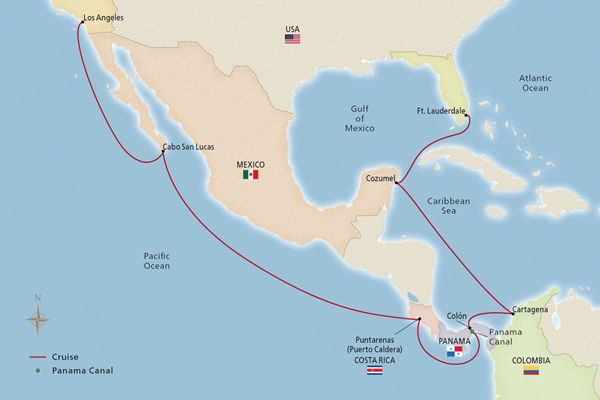
Situated in the southernmost portion of the North American continent, Mexico is bordered by the United States to the north, the Gulf of Mexico and Caribbean Sea to the east, Guatemala and Belize on the southeast and the Pacific Ocean to the west and south. It covers a total area of 758,445 sq mi. (1,964,375 sq km)—roughly three times the size of Texas.
Due to its vast size, Mexico encompasses a wide array of climate zones. Northern Mexico, home to the Sonoran and Chihuahuan deserts, experiences semiarid desert conditions. In contrast, the region south of the Tropic of Cancer enjoys a tropical maritime climate. In these areas, the seasons vary more in precipitation levels than in temperature, with the winter bringing increased rainfall.
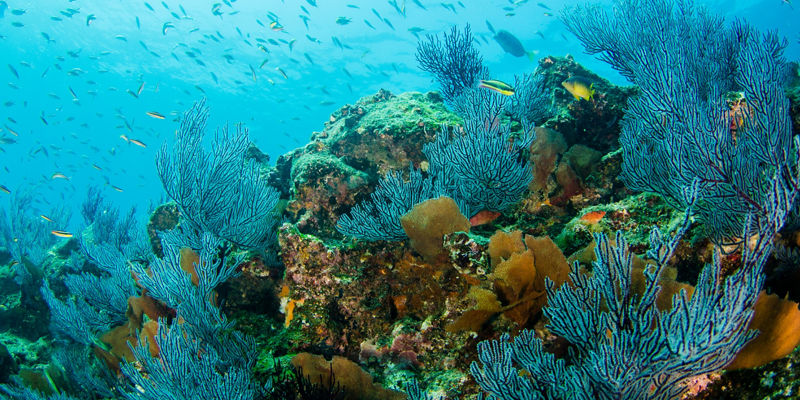
With its expansive deserts, humid rainforests, mangrove swamps and alpine forests, Mexico ranks among the world’s most biodiverse countries. A wide variety of marine species also inhabit Mexico’s coastlines, especially to the east of the Yucatán Peninsula. The island of Cozumel, located 10 mi. (16 km) off the Yucatán coast, is well known for its clear waters and spectacular coral reels.
Mexico City, the country’s capital, was founded in 1521 atop the former Aztec capital of Tenochtitlán. It is one of the oldest continuously inhabited urban settlements in the Western Hemisphere. A vibrant center for arts and culture, Mexico City is also one of the most populous cities in the world. Its historic center was designated a UNESCO World Heritage Site in 1987.
On Mexico’s western side, the Baja California Peninsula stretches into the Pacific Ocean, spanning 760 mi. (1,220 km) long and 25–150 mi. (40–240 km) wide. Comprising the Mexican states of Baja California and Baja California Sur, this long stretch of mountainous land is mostly desert and scrub, celebrated for its stark beauty and sun-dappled shores.
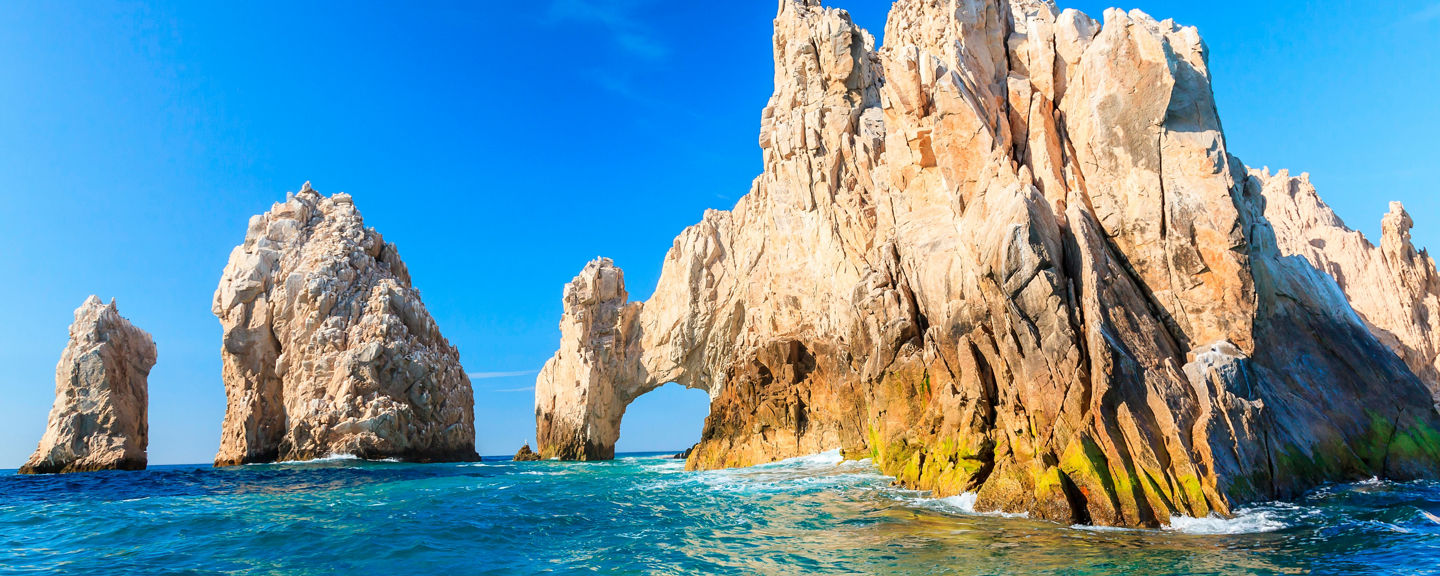
Cabo San Lucas, situated on the extreme southern tip of the Baja California Peninsula, is one of Mexico’s top destinations, famed for its vast beaches, warm waters and picturesque coast. Renowned for the spectacular rock formations lining its shores, this lively tropical city features one of the region’s most scenic harbors.
Other top tourist destinations in Mexico include Acapulco and Puerto Vallarta, two vibrant port cities nestled along the Pacific coastline. Cancún, situated on the Caribbean Sea, is another popular destination due to its natural beauty and abundance of cultural activities.

-
Cozumel, a world-renowned snorkeling destination
Blessed with spectacular coral reefs, crystal clear waters and abundant marine life, it is no surprise that Cozumel has become one of the best places for snorkeling in the world. Famed oceanographer Jacques Cousteau once called the island one of his favorite places for aquatic exploration, and there are many excellent options for travelers to choose from.
The top spots for snorkeling in Cozumel are on the south and west sides of the island where wind and wave conditions are calmest. Chankanaab Park is ideal for novice snorkelers, offering shallow waters with a reef close to the shore. In addition to sea urchins, morays and angelfish, visitors can see the underwater statues that were placed here to help support the reef.
Cozumel Reefs National Marine Park, a protected area teeming with aquatic life, lies a little further south. The park is home to Paradise Reef, where snorkelers may see trumpet fish, nurse sharks and lobsters up close.
Another favorite among locals is El Cielo Reef, a shallow, yet stunningly beautiful, snorkeling site. At El Cielo—which means “heaven” in Spanish—visitors can swim above vibrant coral and watch for yellowtails, angelfish, rays and loggerhead turtles.
-
Tequila
The roots of tequila trace back to the powerful Aztec Empire during the second and third centuries. Now considered Mexico’s national drink, this famous spirit is made from the cooked and fermented juice of the agave, a plant similar in appearance to a cactus.
The Aztecs fermented agave sap to create pulque (also known as octli), a milky, slightly sour alcoholic beverage used during religious ceremonies. In Aztec mythology, the agave was strongly associated with the goddess Mayahuel, and it was considered one of the most sacred and important plants in ancient Mexico.
During the 16th century, Spaniards arrived in Mexico, bringing with them advanced distillation techniques. Soon after, a new agave-based beverage emerged: tequila. Named after a town in the Mexican state of Jalisco, where blue agave grows abundantly, this new spirit quickly gained popularity. In 1600, Don Pedro Sánchez de Tagle—now known as “the father of tequila”—established the first tequila factory at Hacienda Cuisillos.
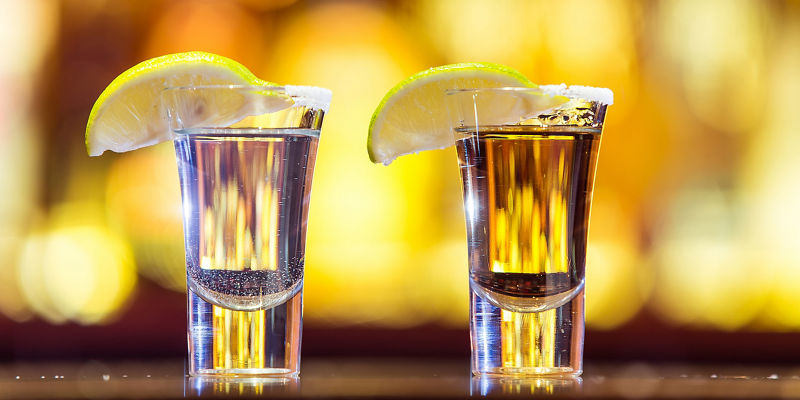
Tequila is made by harvesting the hearts of the blue agave plant, known in Spanish as piñas. The piñas are slowly baked in large ovens, then crushed and shredded to extract their sweet juice. This agave juice, or mosto, is combined with yeast and water in large fermentation tanks. Once fermented, the liquid is distilled to remove impurities and concentrate the alcohol. Typically, tequila is distilled twice, which produces a clear spirit ready to be aged and bottled.
Silver tequila, also known as blanco, is aged only for a short time, resulting in a crisp liquor showcasing the pure agave flavor.
Reposado tequila is aged in oak barrels for two months to one year, giving it a pale color and slightly woody flavor. As the tequila continues to age, its color deepens to a golden hue, and its flavor becomes more mature and complex. Añejo tequila is aged for one to three years, while extra añejo is aged even further.
Another type of tequila, known either as joven (meaning “young”) or oro (meaning “gold”), is made by mixing silver tequila with reposado, resulting in a smooth flavor and a pale amber color.
-
The ruins of San Gervasio
The Maya civilization flourished in Central America from 300 BC until the early 1500s when Spanish explorers arrived. The Maya recorded their beliefs in volumes known as codices, which featured a writing system based on symbols called “glyphs.” Through their rich mythology, they explained the origins of the sun, moon and planets, as well as the weather and the animals they lived amongst.
The San Gervasio archaeological site offers a fascinating glimpse into the inner workings of this highly advanced civilization. This pre-Columbian Mayan site on the island of Cozumel was originally called “Tantun Cuzamil,” which means “flat rock in the place of the swallows.” The oldest ruins here date to 300 BC. They are the remains of what was once an expansive religious site where Maya worshiped Ixchel, the goddess of the moon and femininity. San Gervasio was also a center of commerce, where people from different villages gathered to trade.
Excavations have uncovered that the site was at its largest during the Terminal Classic period (900-1100 AD) and it also thrived during the Post Classic period (1200-1530). Archaeologists believe San Gervasio was one of the most important Mayan pilgrimage sites in all of Mesoamerica. It was still inhabited when Spanish conquistador Juan de Grijalva arrived in 1518, and when explorer Hernan Cortes visited a year later. By 1600, San Gervasio was largely abandoned.
Though not as large as the Mayan ruins of Chichen Itza or Tulum, San Gervasio features well-preserved temples and buildings to explore. Several of the most impressive temples are located near the center plaza of the village. Nine buildings form an enclosed patio and an ancient road—known as the sacbe—connects to other settlements in the area. The Nohoch Nah temple is one of the best-preserved buildings and displays the Maya talent for storytelling, with its intricate murals depicting mythical legends and tales of a feathered serpent god. The Temple of Murals is another structure that highlights Maya artistry, with brightly colored geometric patterns still visible on the walls.
Other notable structures include Los Mercielagos (meaning “the bats”), a smaller temple compound. It was once the residence of the halach unik, or the ruler of Cozumel. Another residence of the local ruler, Las Manitas (meaning “the little hands”), was constructed between 1000 and 1200 AD. It features a shrine and red handprints on the inner walls, which inspired the house's name. The largest structure at San Gervasio is K’ana Nah, which is a four-tiered pyramid with a small temple at the top.
Mexico Highlights
From Cozumel’s beautiful coral reefs and ancient ruins to the spectacular rock formations and adobe homes of Cabo San Lucas, we invite you to immerse yourself in Mexico’s stunning scenery and rich cultural traditions. Here are some highlights you may experience during a visit to this remarkable country:
- Keep watch for whales in the legendary Sea of Cortez
- Embark on a catch-and-release fishing expedition
- Browse the art galleries of charming San José del Cabo
- Sample local spirits, including tequila, rum and mezcal
- Admire the dramatic, rocky coast of Land’s End
- Travel into the heart of the Baja outback on a camel safari
- Visit the picturesque village of Todos Santos
- Ride through stunning coastal terrain on horseback
- Attend a traditional Maya dance performance
- Spend a day at Cozumel’s largest ecological reserve
- Learn to make authentic Mexican salsa and margaritas
- See remarkable marine life during a scuba diving lesson
Mexico Travel FAQ
All-Inclusive Itineraries—Mexico
Choose one of our enriching, all-inclusive voyages and discover the many benefits of exploring in Viking comfort.
Panama Canal & Central America
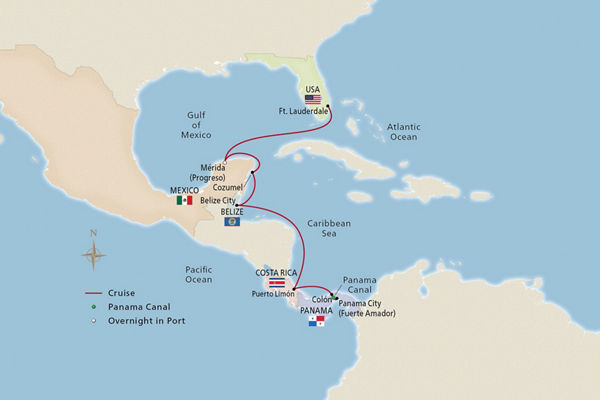
Classic Panama Canal Passage